


 A “misclassification error” is wreaking havoc in the Labor Department (“DOL”), distorting the count of unemployed workers. The May 2020 jobs report issued such a warning for the third month in a row. The DOL believes this error is occurring because many respondents to the survey that determines the unemployment rate are reporting themselves as “employed but absent from work.” The department believes many people falling into that category in recent months should be counted as unemployed. The table below summarizes the 2020 monthly unemployment rates along with additional percentage points for the past three months attributed to the perceived misclassification.
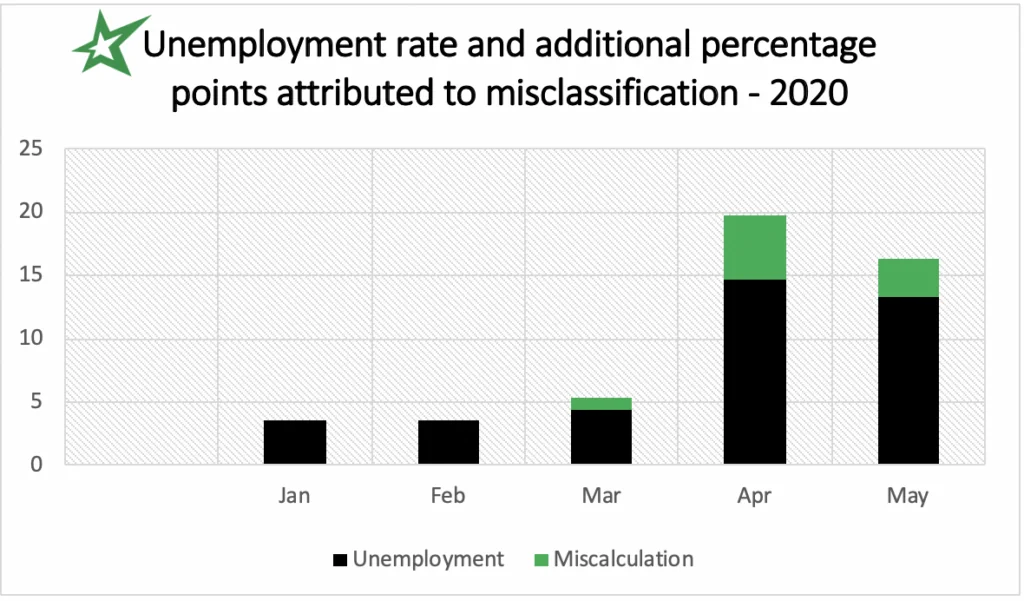
Employment misclassification is not the only problem with current data. Surveys used to determine key economic figures have been polluted by the pandemic, making the data less robust. For example, the Census Bureau is not conducting as many in-person interviews, and fewer people are responding to its Current Population Survey (“CPS”). The CPS is factored into the unemployment rate and other metrics related to the labor market. Another department that has had difficulty gathering reliable data is the Bureau of Labor Statistics. They have struggled to collect consumer price data, resulting in an increase in the number of prices considered temporarily unavailable.
Unreliable data is leading to uncertainty and volatility in the economy. The upshot of this for anyone managing market risk is that it is important to not rely on just one data source or data point, but to use multiple sources in drawing conclusions about the economy and in making hedging decisions. Few events erode a company’s margin quicker than unexpected volatility. Prudent risk managers are locking-in margins now by using derivatives. What’s their objective? It’s to preempt the next government-issued report, undoubtedly fraught with unreliable data, and to hedge against unexpected volatility.